
Your team

Meet the Q-Switched Laser Team

The Plastic Surgery & Aesthetics Medical Center at Chongqing West District Hospital is led by four consultants working inside a tertiary general hospital. Ke He, MD, is responsible for the medical review of this site. Planning a pigment course genuinely involves the other three — the dermatological diagnosis that decides what the pigment is and whether it should be treated at all, the surgical view when a concern turns out not to be a device problem, and hospital-level care for the rare reaction that needs it.

Specialist profiles

Who reviews this content

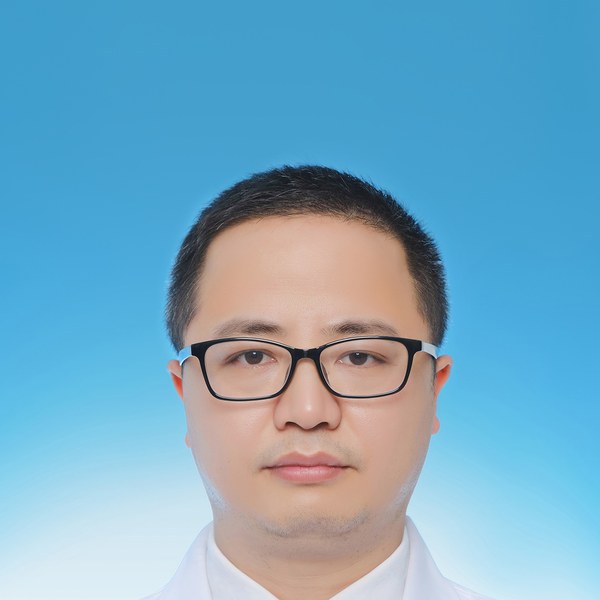
Ke He

Ke He (何锞)

Deputy Director & Head of Skin & Laser Aesthetics · Attending Physician, Licensed Aesthetic Attending · Lead Physician of This Site

Pigment identification before pulse selection · Q-switched and picosecond pigment work · lesion examination and laser safety across skin tones

Dr. Ke He is Deputy Director of the Plastic Surgery & Aesthetics Medical Center at Chongqing West District Hospital and head of its skin and laser aesthetic service — and she is the lead physician of this site. A core specialist formerly at the Plastic and Aesthetic Surgery Department of Xinqiao Hospital, affiliated with Army Medical University, she has worked on the clinical front line in skin laser and injectable aesthetics for more than 20 years, serving over ten thousand patients.

Her method with this class begins with the lesion rather than the device. The spot is examined in ordinary light and with a lens before anything is planned, because a brown patch is a description and not a diagnosis, and the pigment that clears on this course is not the same pigment that darkens on it. She states the pigment type out loud, matches it against how well it is likely to absorb a nanosecond-scale pulse, and gives the session count as a range with a review point rather than as a fixed number. Where a test spot is warranted she observes it for weeks rather than days, and she names the stopping rule before the course starts. She also says no: where the pigment is melasma-type and active, where a lesion needs a dermatological examination first, or where the real concern is laxity, volume or scarring that a pigment laser cannot reach.

Clinical focus

  • Lesion examination and pigment identification before any pulse class is chosen
  • Q-switched and picosecond pigment work, planned as a staged series with defined review points
  • Test-spot practice and the observation period that makes it worth doing
  • Laser safety across skin tones, including pigment change in both directions
  • Stopping rules, including recognising melasma-type pigment that further sessions leave worse

Academic roles & achievements

  • Member, Laser Medicine Group, Chinese Medical Association Plastic Surgery Branch
  • Member, Facial Rejuvenation Group, Chinese Medical Association Plastic Surgery Branch
  • Member, Chongqing Plastic Surgery Quality Control Center
  • Published 5 papers, holds 5 national patents, and introduced 2 new clinical techniques

Which pigment, before which pulse

A Q-switched laser depends on the pigment absorbing the light, so the same plan can clear one person's patch over a few sessions and barely move another's. That is not a difference in technique or in how carefully the session was done. It is the pigment itself, which is why identifying what the brown patch is comes before deciding what to treat it with.


Shaoliang Wang

Shaoliang Wang (王韶亮)

Director, Plastic Surgery & Aesthetics Medical Center · Vice Chief Physician, Associate Professor, Doctor of Medicine

Plastic surgery · surgical assessment · hospital-level care

Dr. Shaoliang Wang is Director of the Plastic Surgery & Aesthetics Medical Center at Chongqing West District Hospital. Within the team he provides the surgical perspective and the tertiary-hospital backstop — the assessment when an operation is the honest answer, and the hospital-level care for the rare complication that needs it.

His part of the assessment is whether the change that bothers you sits in the surface of the skin or beneath it. When the answer is beneath it, no pigment session reaches it, and the honest recommendation is a different plan. He also carries the hospital-level backstop for the rare pigment-laser reaction that needs theatre care rather than an outpatient visit.

Clinical focus

  • Center leadership and multidisciplinary case review
  • Surgical assessment when an operation is the honest answer to descent or excess skin
  • Hospital-based care for the rare complication that needs theatre-level management
Tongchun Mao

Tongchun Mao (毛彤春)

Deputy Director & Head of Aesthetic Surgery · Vice Chief Physician, Licensed Aesthetic Attending

Aesthetic surgery · refinement · honest referral

Dr. Tongchun Mao is an aesthetic surgeon within the Plastic Surgery & Aesthetics Medical Center at Chongqing West District Hospital. Within the team his role is refinement and honest referral: he is the person who says so when an operation will do better than an injectable or a device.

Some concerns are pigment problems and some are not. His role is recognising when a course of pigment sessions has reached the limit of what it can change, and saying so rather than selling another series. A team that practises both surgery and devices under one roof has no reason to keep offering pigment sessions for a problem pigment cannot reach.

Clinical focus

  • Aesthetic surgical assessment and refinement of contour and asymmetry
  • Honest referral when surgery outperforms a course of injections
  • Shared case planning within the four-physician team
Yongbo Jia

Yongbo Jia (贾勇波)

Deputy Director & Head of Dermatology · Vice Chief Physician, Licensed Aesthetic Attending

Dermatology · pigment diagnosis · skin that has reacted

Dr. Yongbo Jia is a dermatologist within the Plastic Surgery & Aesthetics Medical Center at Chongqing West District Hospital. Within the team his role is medical skin assessment — diagnosing and managing pigment and barrier conditions, and treating skin that a device or an injection has irritated.

Melasma-type pigment, post-inflammatory pigment and pigment that has darkened after treatment all sit with him, because they are managed with topical control and time as much as with any technology. He also sees skin that a device has irritated, where the next step is usually less treatment rather than more, and he is the person who examines a lesion that should never have been planned for a laser.

Clinical focus

  • Medical skin assessment behind injectable treatment plans
  • Diagnosis and management of pigment and barrier conditions
  • Dermatologic care of skin after irritation or a delayed reaction

Not sure whether your pigment belongs on this plan?

An assessment starts with what the patch actually is and how well it is likely to absorb the light. We will say plainly what a Q-switched course would change, what it cannot change, how many sessions it may take, and what we would advise instead if the honest answer is something else.

Contact the Team